
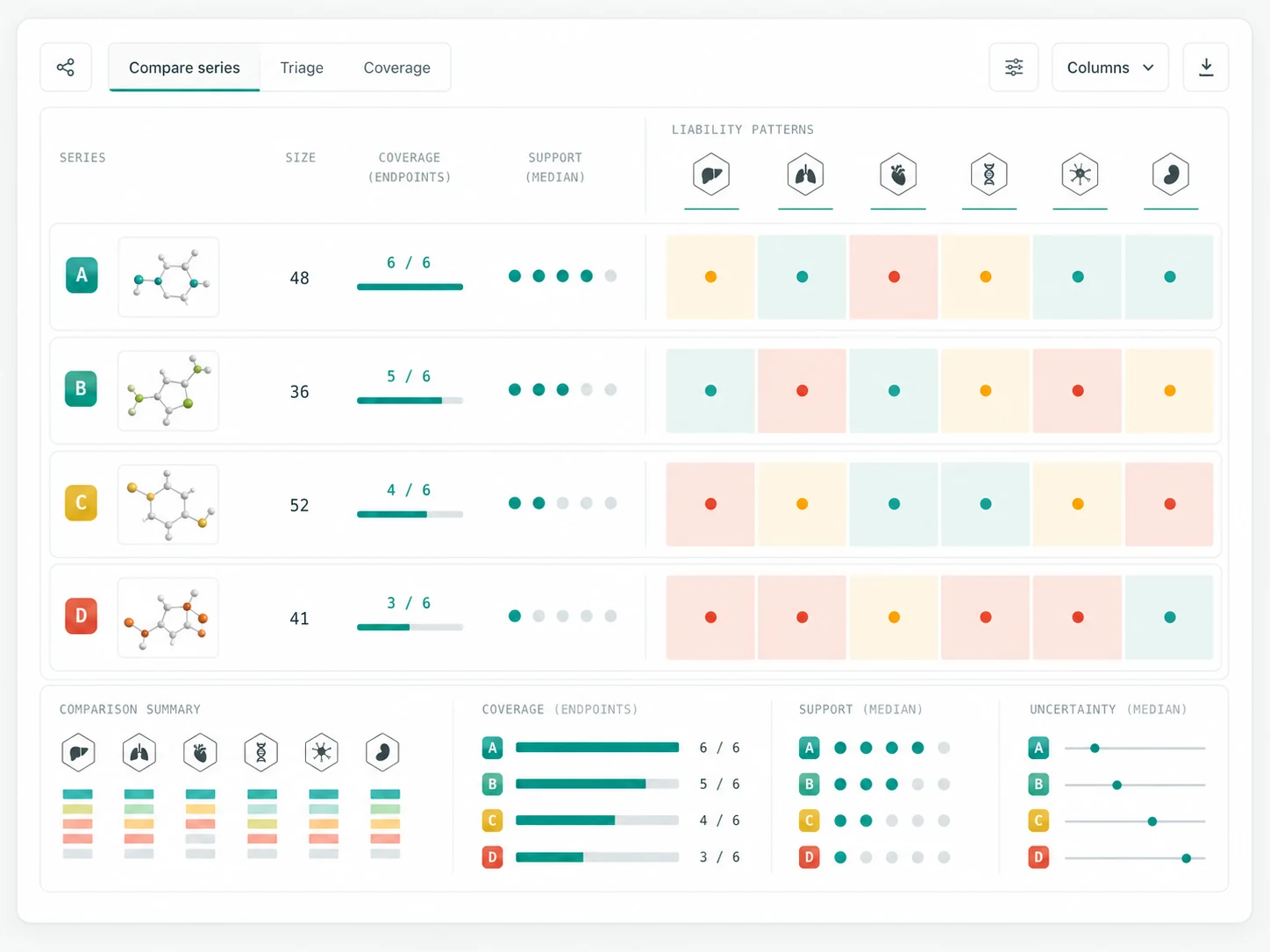
Between-series triage
Compare liability patterns, evidence coverage, support, and uncertainty across related chemistry.
Compound and chemical-series safety
Prioritize compounds and related chemical series while keeping the evidence behind every signal visible.
The decision
Discovery teams often have more compounds than assay capacity and several tools that disagree. The useful question is which result should change synthesis, design, testing, or advancement, and why.
MLTox keeps toxicity, potency, ADME/PK, physicochemistry, analogue evidence, and uncertainty separate so one attractive score cannot hide a weak model or poor drug profile.
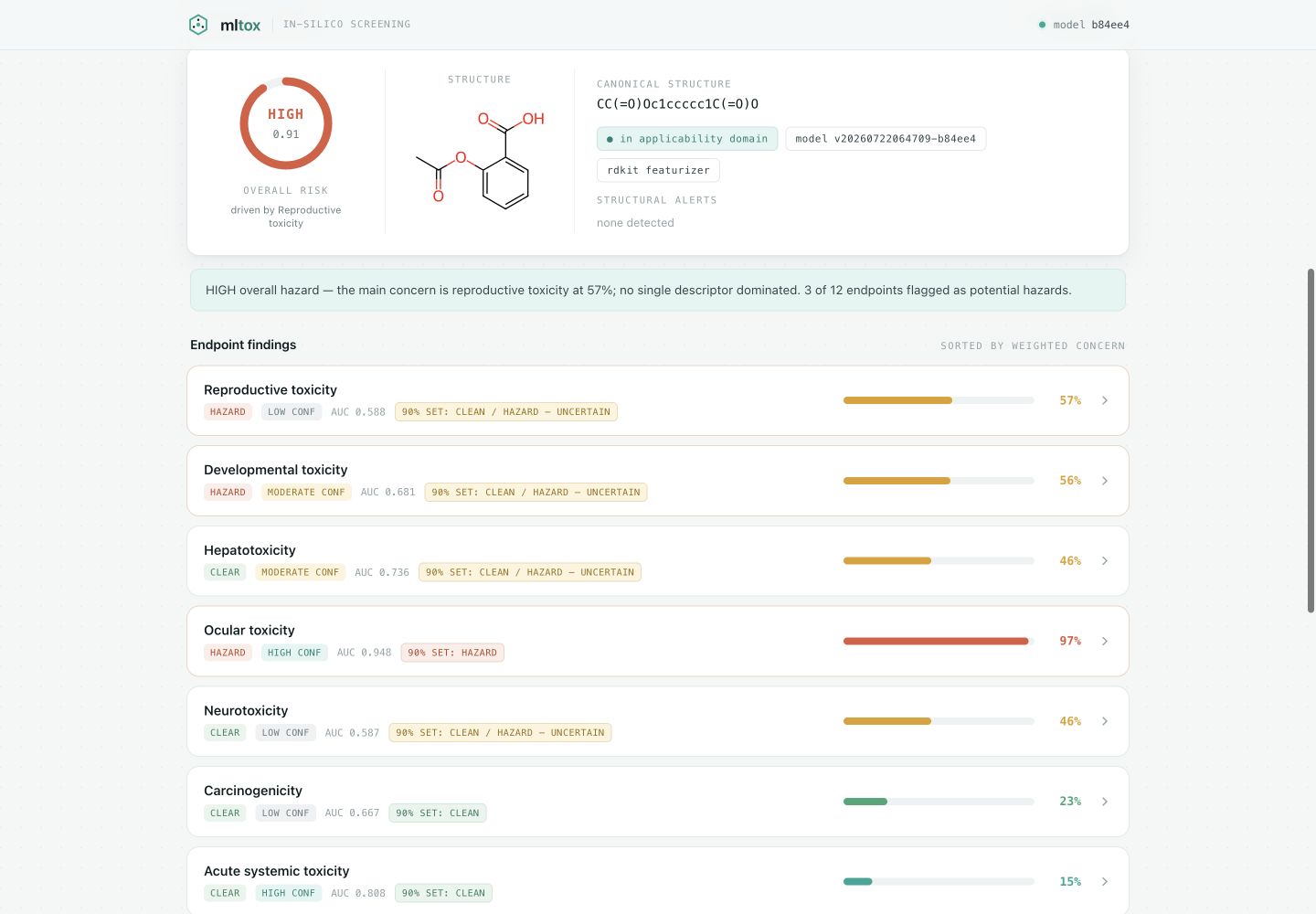
SeriesLens is the chemical-series workflow inside MLTox Small Molecule Safety. It compares user-defined series while preserving each compound's endpoint evidence.
Compare liability patterns, evidence coverage, support, and uncertainty across related chemistry.
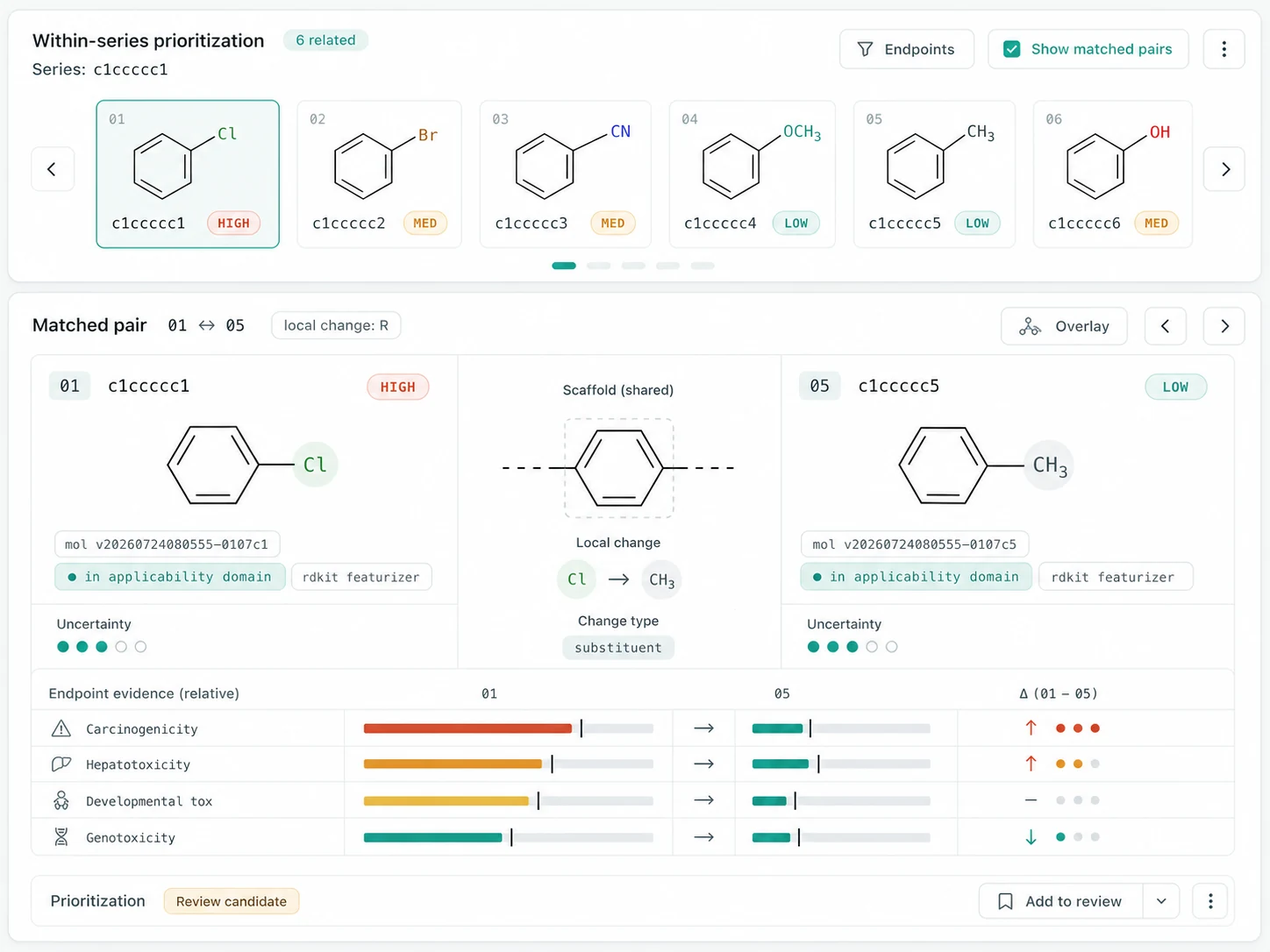
Inspect the compounds and local structural changes that drive the pattern before deciding what to make or test next.
Endpoint coverage
Coverage and performance vary by endpoint and model version. Fourteen standard outputs and one exploratory nephrotoxicity output retain model evidence, applicability, uncertainty, and intended-use limits.
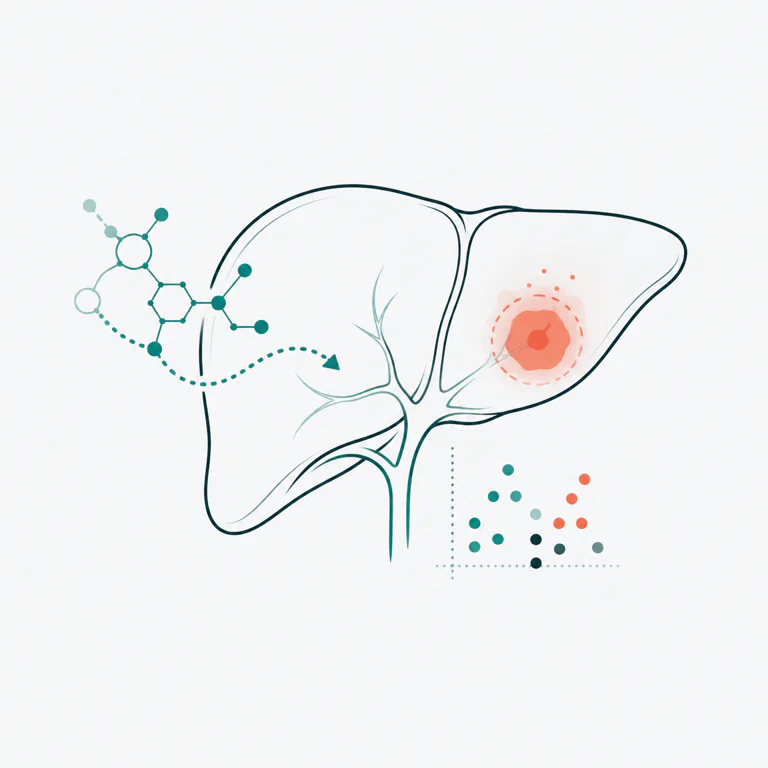
Selected endpoint
Potential to cause drug-induced liver injury (DILI).
Boundary: this is a screening classification for scientific prioritization. It does not replace the endpoint-specific experimental study.
Hazard × dose
Three direct structure-based dose readouts, plus a tiered systemic POD and a derived IVIVE cardiac margin, add magnitude to the hazard profile. Precision follows the evidence supporting each model.
Magnitude map
Approximate rat oral mg/kg value, broad interval, and GHS category.
Channel-block concentration, blocker class, and uncertainty range.
Estrogen-receptor activity concentration and potency tier.
Coarse bands remain visibly separate from direct model readouts.
Applicability gate. The platform withholds estimates outside recognized chemistry instead of extending the scale beyond its evidence.
ADME/PK and druglikeness
Seven regressors and eight classifiers cover absorption, distribution, metabolism, and excretion. Computed physicochemical and medicinal-chemistry rules sit beside the predictions.
Selected disposition domain
Can the compound cross key barriers and support oral uptake?
Each result keeps its endpoint metric, uncertainty range, and applicability decision beside the value.
| Endpoint | Result | Type | Validation or range |
|---|---|---|---|
| Caco-2 permeability | -4.189 | log(Papp cm/s) | R² .637 · 95% range -5.106 to -3.272 |
| Human intestinal absorption | 100% | Positive probability | AUC .961 |
| PAMPA permeability | 88% | Positive probability | AUC .746 |
| Oral bioavailability | 83% | Positive probability | AUC .672 |
| P-gp inhibition | 8% | Positive probability | AUC .930 |
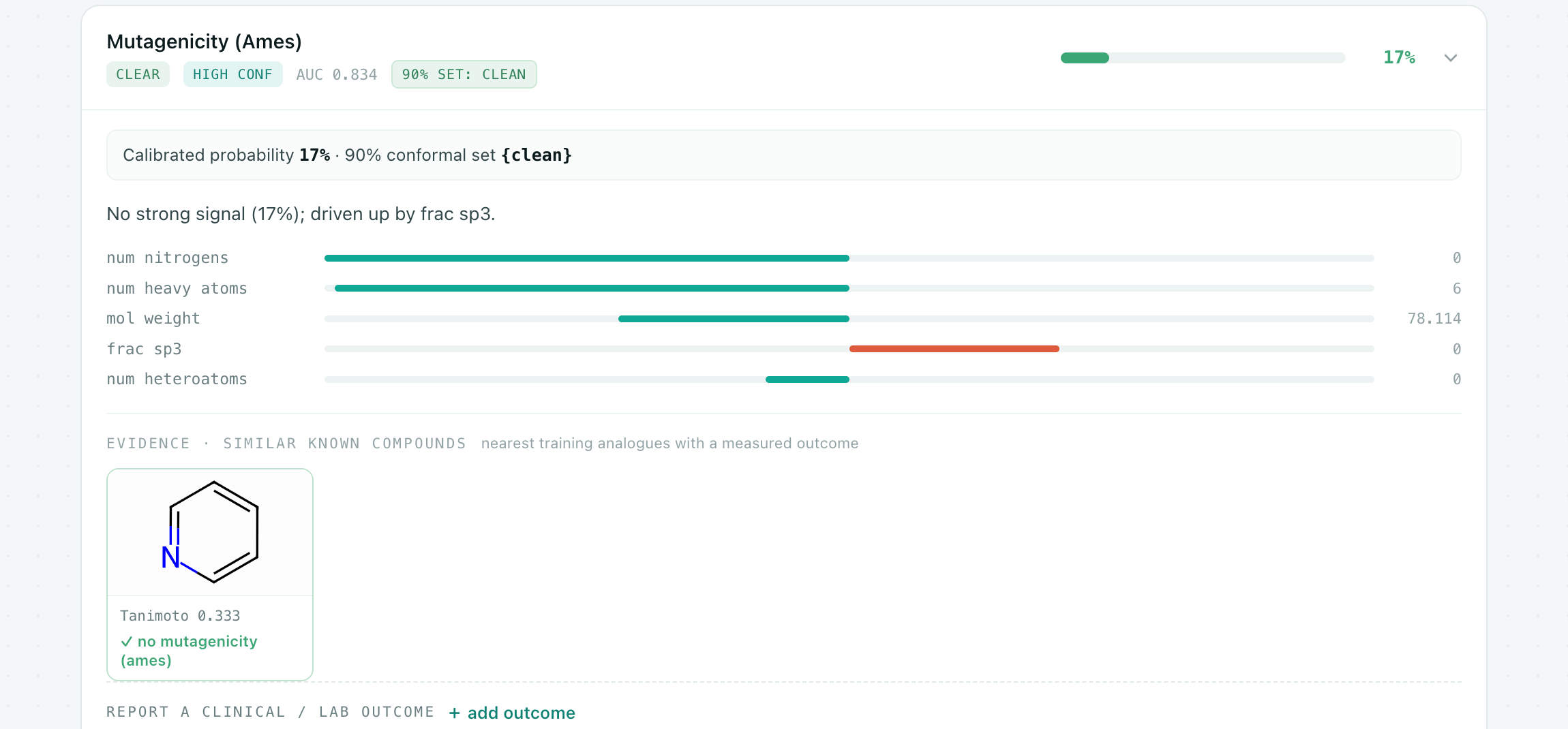
The report gives a chemist, toxicologist, or reviewer several independent ways to challenge the prediction before acting.
Inspect similar training compounds, ECFP4 similarity, domain status, and measured outcomes rather than trusting a global score alone.
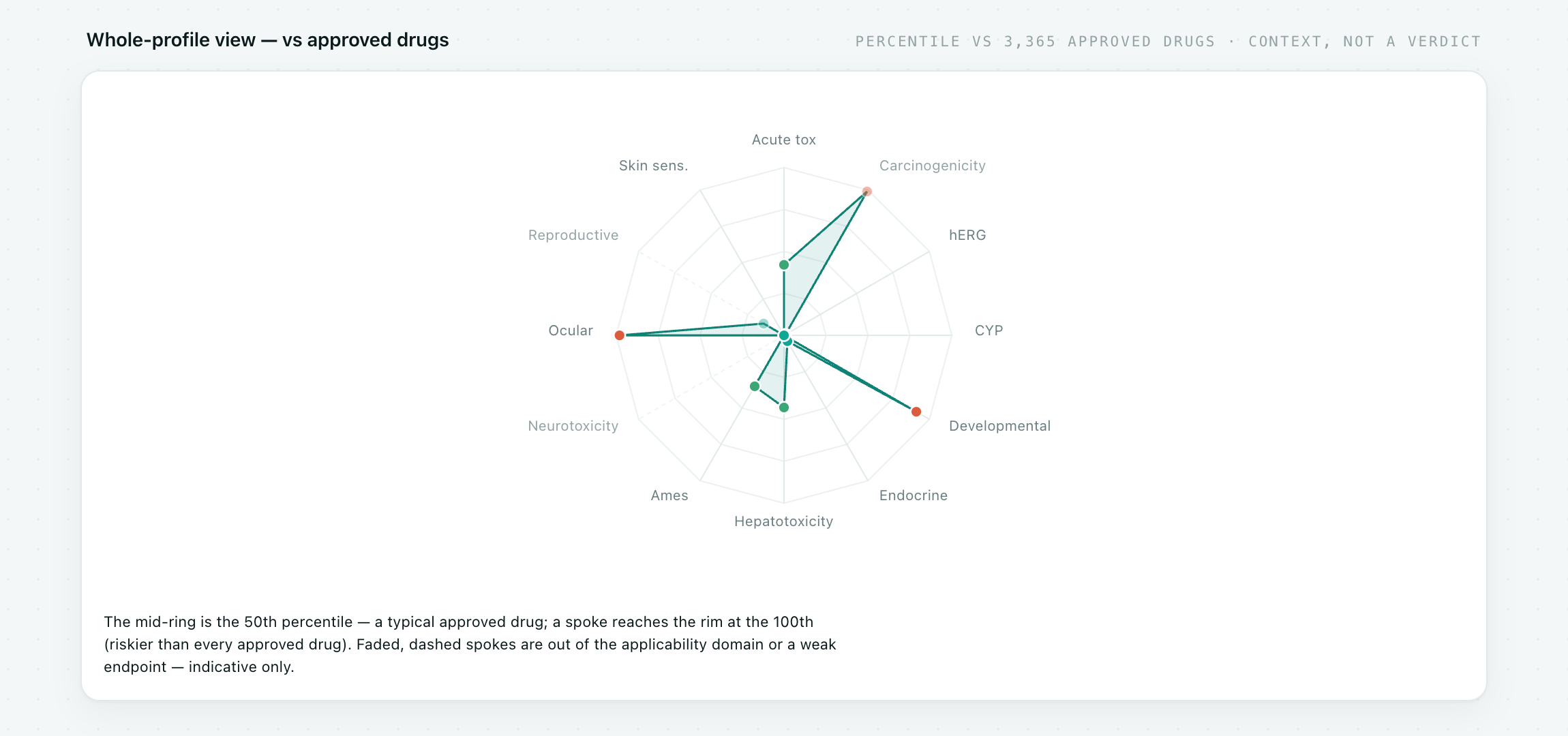
Place the whole profile against 3,365 approved drugs while fading weak or out-of-domain spokes.
Export model-level and prediction-level documentation as PDF or editable DOCX; the files support review but do not guarantee regulatory acceptance.
Screen up to 300 submitted entries per request, integrate through REST/CLI/Python, and ask questions grounded only in the report.
Workflow
Move from a controlled structure to an endpoint-level decision without losing the evidence, uncertainty, model version, or report context.
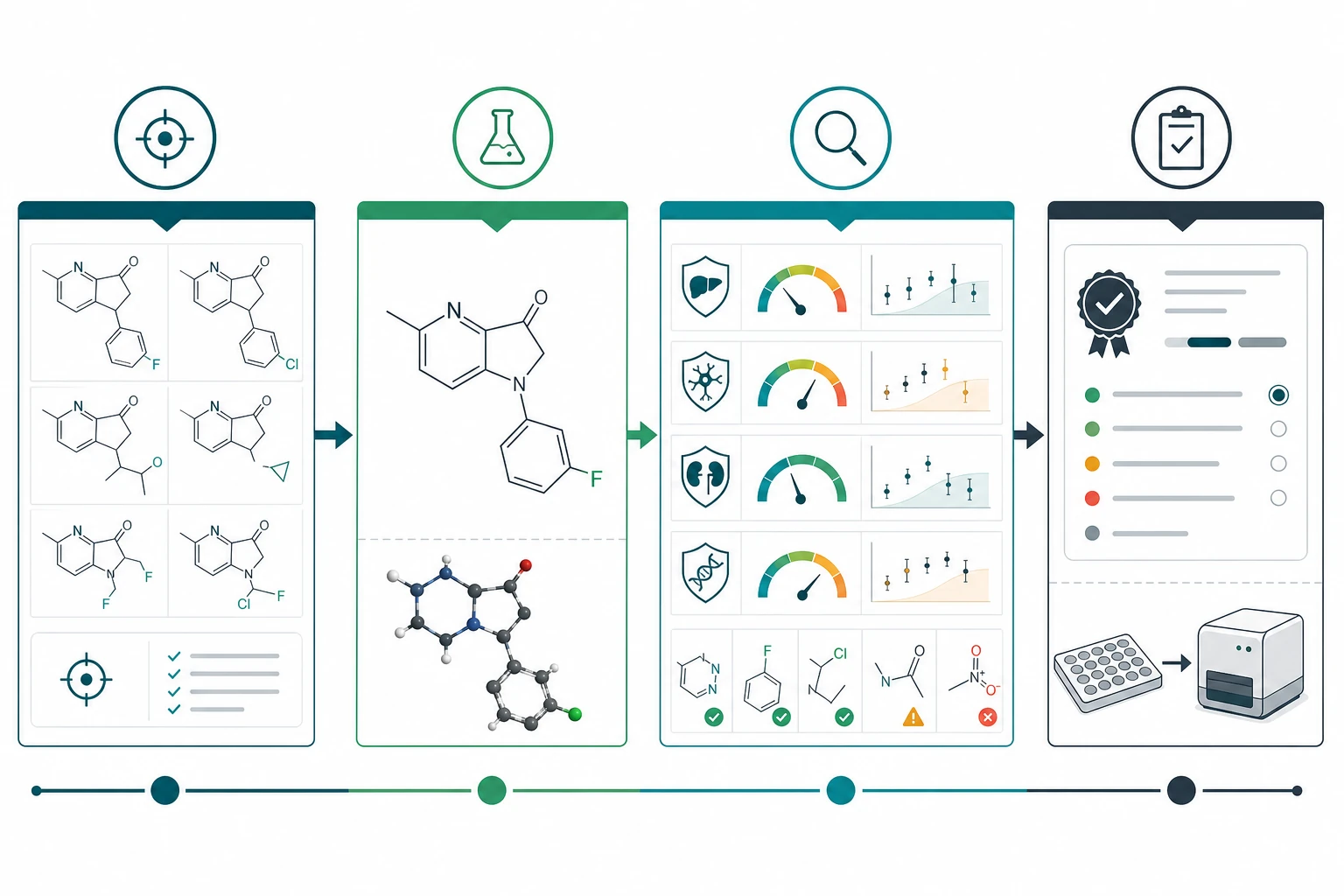
Name the compound set, discovery stage, endpoints, comparator, decision owner, and action that may change.
Draw it, search a public name, paste SMILES/InChI/MOL, or upload a .smi or .sdf library.
Review hazards, potency, ADME/PK, physicochemistry, analogue evidence, uncertainty, and domain status.
Rank the library, export PDF/JSON/QMRF/QPRF, or submit a confirmed small-molecule outcome for retraining.
Decision confidence
MLTox keeps four different questions visible so reviewers can tell whether a prediction should inform the decision, trigger more evidence, or be withheld.

Start with endpoint-specific evaluation, calibration, dataset design, and the exact model version rather than the displayed probability alone.
Inspect the 90% split-conformal set. Coverage is marginal across the data distribution, not a guarantee for this molecule.
Check applicability, nearby evidence, scaffold coverage, and conflicts before carrying the result into a series decision.
Record whether to advance, redesign, run a targeted assay, seek expert review, or abstain, together with the reason.
Team workflow
The record is shared. Each discipline keeps its own judgment and responsibility.
Medicinal chemistry
Bring endpoint findings into series and design reviews.
DMPK and discovery safety
Prioritize assays and challenge uncertain results.
Computational toxicology
Inspect versions, applicability, calibration, and disagreement.
Project toxicology and informatics
Connect candidate reviews, reports, and scientific systems.
Focused evaluation
Start with one historical program and a time-held-out compound set. Test compound and series prioritization against current tools, expert review, and assay plans.
Discuss a small-molecule pilotMeasures that matter